
Article
Could RBF 2.0 Motivate Health Workers to Go the Extra Mile? High-Risk Pregnant Women May Have New Reason for Hope
RBF 2.0 strengthens high-risk pregnancy care by rewarding verified quality services, timely payments, and improved health-worker performance through digital financing.
By Results-Based Financing
Shifo Foundation
3 min read
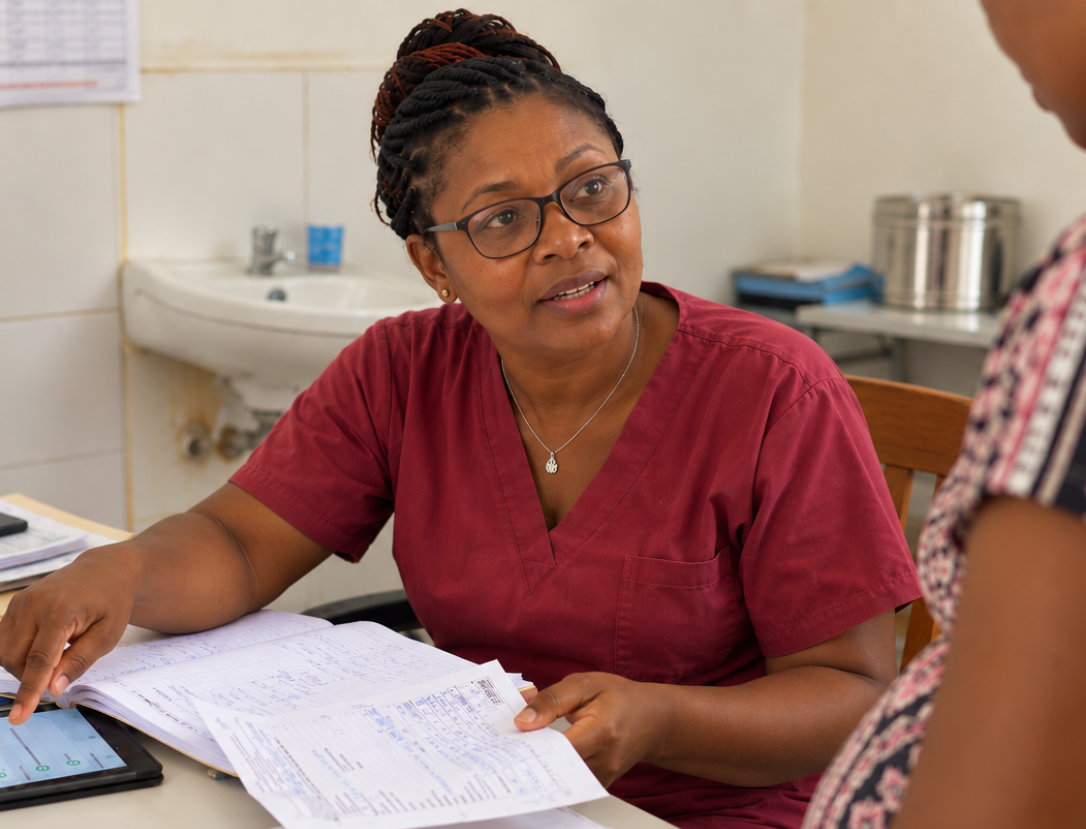
Welcoming a newborn into the world is one of the most transformative and anticipated experiences in a woman’s life. While some women have a smooth pregnancy and delivery with minimal complications, many others may experience severe bleeding, pregnancy-related hypertension, and other life-threatening complications that pose a risk to both mother and baby.
Every woman going through a high-risk pregnancy yearns for someone to hold her hand and guide her safely through one of the most vulnerable moments of her life. Yet, many women in low-income countries spend their journey to motherhood battling fear and uncertainty instead of cherishing the experience as they rightfully should.
Despite these challenges, high-risk pregnancies have rarely been the focus of health financing initiatives designed to incentivise quality care. Supporting women experiencing high-risk pregnancies is a demanding responsibility that requires health workers to have specialised training, provide timely intervention, and receive supportive supervision. Above all, being rewarded for their efforts through a regular and timely pay motivates health workers to continue providing quality care. This is where traditional financing models fall short. Most health workers in low-income countries are hardly ever paid on time. When health workers themselves are struggling to make ends meet, they naturally feel discouraged and may not be able to deliver their best. Without satisfied and motivated health workers, it becomes difficult to sustain quality care and positive outcomes for women with high-risk pregnancies.
What makes RBF 2.0 different?
While investments in infrastructure, equipment, and training are essential, they alone are not enough. The most impactful way to support health workers is to strengthen the health financing systems that support them. This is the idea behind Shifo Foundation’s second-generation Results-Based Financing (RBF 2.0). Through digitisation and automation, RBF 2.0 makes traditional RBF more accurate, efficient and transparent.
The core idea involves linking payments directly to verified health services, allowing digital patient records to be integrated into the RBF 2.0 model.
For instance, caring for a woman with a high-risk pregnancy involves a number of measurable key performance indicators (KPIs) that include identifying the signs of a high-risk pregnancy early, providing timely care, and ensuring regular follow-ups. Each KPI is assigned a target. Once health workers meet a specific performance target, they receive payment for the services they have delivered.
In order to validate service delivery, RBF 2.0 performs accuracy verification. In the case of high-risk pregnancies, a sample of patients who have received care at the facility is randomly selected each month, and verifiers call these patients to confirm the care they received. After the required number of high-risk pregnancy cases is validated, a payment request is initiated, which is reviewed and approved by the manager of the health facility. Finally, after multiple stages of review, the system generates a bill along with the supporting documents. This way, every single payment is carefully checked before being processed, allowing health workers to be paid only for the services that have been independently verified.
Why timely payments matter
A progressive payment structure also helps health facilities perform better. It works by rewarding health workers with higher payments when they go the extra mile for their patients. Since each KPI has a fixed target, payments are adjusted based on how well these goals are met. This creates an environment where good performance is recognised and rewarded. In doing so, RBF 2.0 makes the entire process simpler, more transparent and accountable.
Over time, health workers begin to notice that the more effort they put into caring for patients, the more likely they are to reap the rewards of their efforts. For women with high-risk pregnancies, this would be a boon, as it would give them a better chance of receiving the quality care they deserve. In the long run, this would allow more women to experience a safe delivery and a successful recovery.
After all, no woman should have to risk her life to become a mother.
About the author
Results-Based Financing
Shifo Foundation
Shifo Foundation's Results-Based Financing team works with governments to make performance-linked health financing accurate, timely and transparent.
LinkedInWant to discuss this with Shifo?
Get in touch with our team to talk about Results-Based Financing in your context.
Get in touch