
Article
What If We Stopped Funding Health Projects and Started Funding Health Systems?
A case for shifting global health financing from short-term projects to sustainable health systems that strengthen governments, facilities and frontline workers.
By Ashima Sharda
Health communications specialist and journalist
5 min read
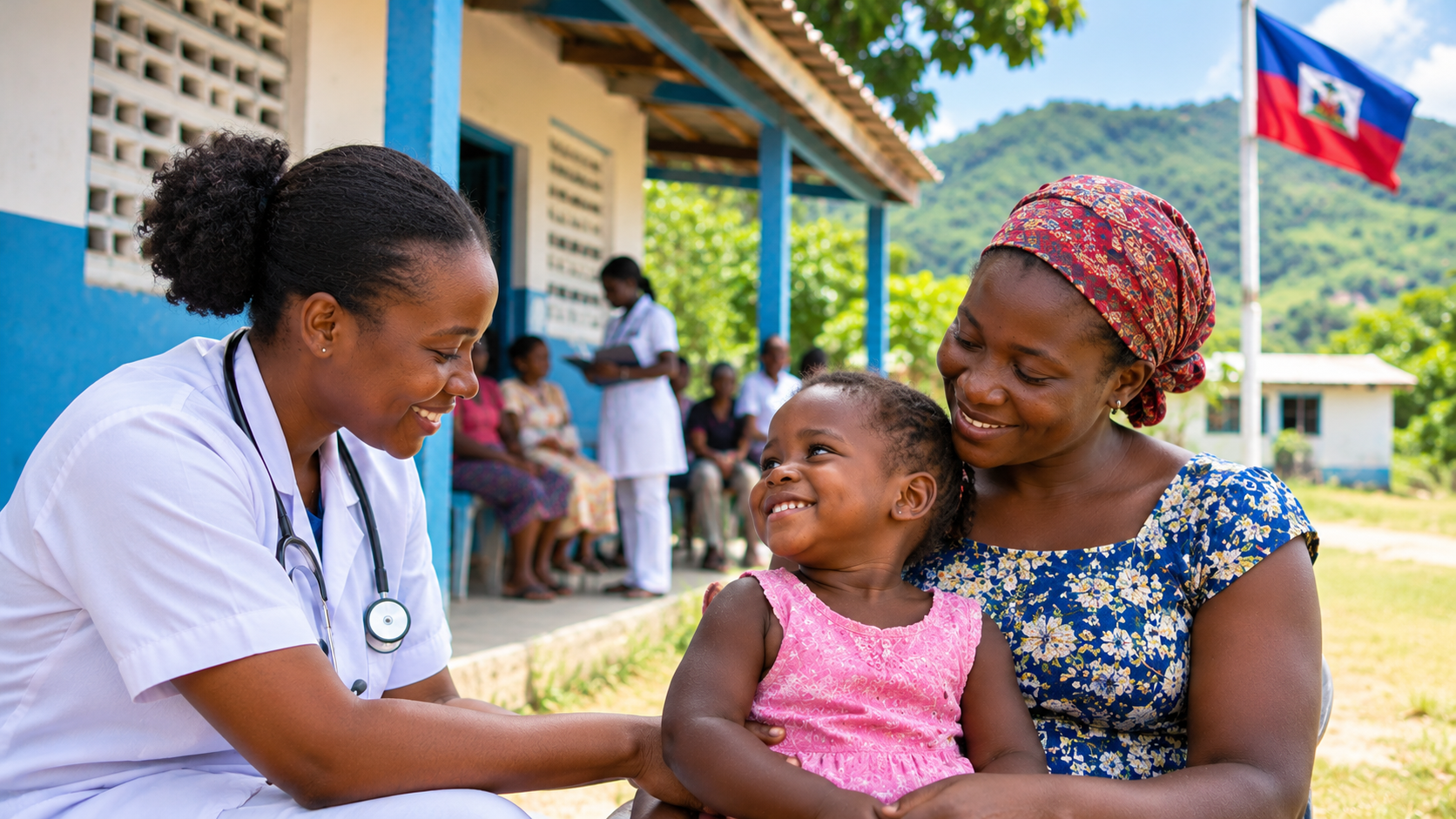
Something about how we fund global health feels slightly uncomfortable. We have become very good at funding projects. There is a problem, so we design a programme. There is funding, so we create a grant. There are activities, so we create indicators to measure them. People get trained, facilities get equipped, meetings are held, reports are submitted, and targets are ticked off. And for a while, everyone can point to progress.
Then the funding ends and the project closes. The team moves on, the consultants leave, and the reporting stops. However, the health system is still standing there, facing many of the same problems it had before the project began. This raises a slightly uncomfortable question: What if we have been funding too many health projects and not enough health systems?
What does a project actually leave behind?
This isn't an argument against health programmes. Many of them do incredibly important work. They save lives, introduce new approaches and demonstrate what is possible. The question is a different one: What do they leave behind? Because there is a big difference between doing something in a health system and making the health system better at doing that thing itself.
Take training. A lot of money goes into training health workers. And training matters, of course it does. But what happens six months later? Does the health worker have the equipment they need? Do they have enough colleagues? Are they supported by their supervisor? Do they have access to the data they need? Are they motivated to use what they learned? Has the quality of care actually improved?
Or did we simply complete another training programme and add another number to a donor report?
The same question applies to data. We collect a lot of it, but collecting data and using data are two very different things. A health facility can submit every report on time and still struggle to provide good care. So perhaps the question shouldn't always be: Did we collect the data? Perhaps it should be: Did the data help someone make a better decision?
Rethinking where the money flows
This is where the conversation around Results-Based Financing, and especially RBF 2.0, becomes interesting. The idea isn't simply to pay people for hitting targets but to change what the money is actually trying to achieve.
A World Bank review of performance-based financing across nearly 40 countries offers an important perspective. It found that these projects produced gains in health outcomes, but those gains did not necessarily come from financial incentives alone. Transparency, accountability, and financing that reaches frontline providers also matter.
Right now, much health financing follows a familiar path:
- Money goes into a project.
- The project pays for activities.
- Activities generate outputs.
- Outputs generate reports.
- And eventually, the project ends.
What if we thought about that differently?
What if more of the money flowed through the health system itself – through governments, health facilities, and frontline workers – and was linked to the results we actually care about? Not just how many workshops were held, or how many people attended training and how many forms were completed. But whether services improved, patients received better care, health workers became more capable, facilities became stronger, and governments became better at managing performance.
The World Health Organization's guide to implementing the primary healthcare approach makes a similar case for looking at the wider system. It identifies governance, financing, human resources, medicines, infrastructure, and digital health as interconnected levers for stronger primary healthcare.
That is a very different way of thinking about development money. And sometimes we create another project to fix the weaknesses created by the previous project. Maybe we don't always need more activity, but to get better at directing the money we already have. Because money doesn't just buy things; it builds capacity – depending on where it flows.
Building systems, not parallel projects
If money consistently flows through parallel projects, we can end up building parallel capacity. But if money flows through government systems, health facilities and frontline workers, we have a much better chance of building institutional capacity. And that distinction matters enormously.
The UN Secretary-General's remarks at the 2023 High-Level Meeting on Universal Health Coverage made a clear call for governments to invest in systems that address communities' needs, strengthen primary healthcare and support a well-trained, adequately paid health workforce.
Imagine a donor-funded programme makes a district perform brilliantly for three years. But the real test comes in the fourth year when the donor has moved on, the project manager has left, consultants are gone, and special incentives have stopped. What happens then? If the performance continues, perhaps something was actually built, but if it disappears, perhaps the performance was simply rented for three years.
That is one of the biggest questions behind RBF 2.0.
Not: How do we create another successful health programme? But: How do we make the health system itself better at producing results? That requires a different mindset, as it means treating governments as owners, not simply implementers. It also means giving frontline workers a reason to care about performance, not just another training to attend and then forget.
Measure what remains
This may actually be one of the hardest things for the global health ecosystem to measure. We are very comfortable measuring what happened during a project but not measuring what survived after it. Perhaps that is exactly where we should start looking. At the end of a programme, perhaps we should ask:
Did the health worker become more capable? Did the facility become stronger? Did the government become better at managing performance? Did the data become useful? Did the financing become smarter?
And perhaps the most important question of all - What is still working now that the project is gone? Because the ultimate test of a health programme should not be how successful it was while someone was paying for it. It should be what remains when they stop.
If nothing remains, then perhaps we didn't build a health system, but a project. And perhaps RBF 2.0 is really about making sure we stop confusing the two.
About the author
Ashima Sharda
Health communications specialist and journalist
Ashima is a journalist, editor and strategic communications professional with over 20 years of experience. She helps shape global health narratives around Results-Based Financing (RBF 2.0), digital health innovation, and healthcare transformation. She is an alumna of the University of Delhi and IIM-Kozhikode.
LinkedInWant to discuss this with Shifo?
Get in touch with our team to talk about Results-Based Financing in your context.
Get in touch